Rust, how a solo builder survived 200 hunters on Willjum's server
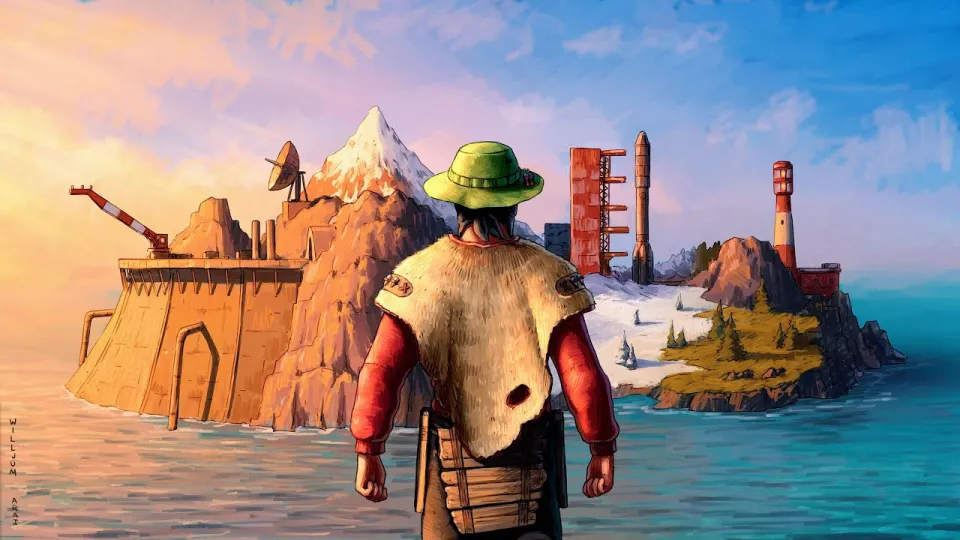
Video: When a Solo Rust builder Vs 200 Hunters...
You can order the same kind of articles for your own video to boost it on YouTube and Google. Just message the Telegram bot @sat_sit_bot. It writes articles around your video, embeds the video and publishes them on popular niche websites (no ads). Your first 50 articles are free.
· based on the channel Willjum
Key takeaways
- Willjum's challenge pits one solo builder against a server of roughly 200 hunters hunting his base.
- The solo run starts with a short prep window, so every wall, door and turret has to be placed with intent.
- Hunters arrive in waves rather than one army, which lets a builder trade time and materials for survival.
- Friendly players can still deliver supplies, and the video shows gear and rope drops reaching the builder.
- The format is built for repeat runs: duo versions, longer prep windows and multi-creator islands are the most requested follow-ups.
In Rust, a solo builder survives a 200-hunter server by treating the base as the win condition: compact footprint, layered doors, redundant loot rooms and a prep window spent on defence instead of gear. That is the premise of Willjum's solo-vs-horde challenge, where one player constructs and holds a base while a whole server is pointed at it. Supporters can back more experiments like this through Willjum's Patreon, which funds the production side of the channel.
What the solo-versus-horde format actually is
The format is asymmetric survival: one builder gets a limited preparation period, then the rest of the server is free to raid, camp and hunt. Rust's normal solo experience is already about avoiding fights you cannot win; here the pressure is inverted, because the hunters know exactly where the target is and roughly what it cost to build.
A few rules of thumb define the mode:
- The builder starts alone, with no clan, no team voice chat and no shared upkeep.
- Prep time is short — measured in hours, not days — so blueprints, furnaces and defence compete for the same minutes.
- Hunters are not one organised army; they arrive in waves, which is the builder's only real advantage.
- The base must be self-sufficient: nothing important can live in a stash or a second outpost.
- The run ends when the core is breached or when the builder outlasts the pressure.
The appeal is that it removes Rust's usual escape valve. A normal solo can rotate to a new biome, join a group or simply log off; a builder under a server-wide hunt has to solve the problem with architecture and timing.
Base design decisions that decide the run
Base design is the core skill being tested, and the winning pattern is depth over size. A small, tall footprint with several cheap layers forces hunters to spend explosives on stone and sheet metal before they ever reach the loot, while a sprawling compound gives a large group multiple easy entry points.
Practical priorities for a builder in this situation:
- Multiple loot rooms. Split guns, explosives and resources so a single breach does not end the run.
- Door stacking and airlocks. Every extra door is seconds of protection and a louder warning that someone is inside.
- Shooting floors over open roofs. A builder who can see the approach can punish hunters who bring only melee tools and ladders.
- Turret coverage on the blind sides. Automated defence buys the minutes a solo player needs to reposition.
- Decoy structures. A cheap outer shell that looks like the main base absorbs the first raid and reveals the attackers' gear.
Upkeep is the quiet killer. A base large enough to look intimidating also drains resources every day, and a solo builder cannot farm while under siege, so the design has to stay affordable between attacks.
How a solo player handles 200 hunters
Surviving a server-wide hunt is a time-management problem more than a shooting problem. The builder's job is to make each hunter's raid expensive, boring or unprofitable, and to never be in the same room as a group that outnumbers them.
A workable sequence looks like this:
- Spend the first block of prep on tools, furnaces and a small starter base, not on a rifle.
- Upgrade the core to stone and add doors before adding decoration or extra rooms.
- Farm in short, close loops so a death costs minutes rather than an hour.
- Use noise and lights to bait hunters into the outer shell, then repair from inside.
- Keep a fallback kit and a second exit so a breach is a setback, not the end.
The video's most telling detail is that the builder is not alone in a social sense. Players on the server still interact with him — supplies arrive, trades happen, and some hunters are less committed than others. That ambiguity is what makes the scenario readable as a story rather than a pure deathmatch.
Supplies, diplomacy and the soft side of Rust
Diplomacy is an underrated defence in Rust, and a builder facing a whole server needs it. Hunters are players with their own goals: some want loot, some want content, some just want to see the base fall. A builder who talks, trades and makes a few of them useful converts potential attackers into delivery services.
In the run, gear and rope reach the builder from outside the base — the kind of small kindness that changes a wipe. Rope matters more than it looks: it feeds bows, satchels and the cheap tools a solo needs to keep rebuilding after every raid. On a server where everyone else is hunting you, one player willing to drop supplies can extend a run by hours.
The counterpoint is trust. Every friendly contact is also a map marker, and a builder who accepts too many visitors eventually invites a raid through the front door. The safest pattern is to meet outside, never let a stranger see the core, and treat every delivery as a one-time trade rather than a relationship.
What the community wants next from the challenge
The most common reaction to the format is a request for a sequel with different parameters. Viewers push for a duo version, a longer preparation window, and a multi-creator island where several builders defend separate bases before falling back to a final shared position.
The most interesting suggestions share one idea: change a single variable and see how the base changes with it.
- Longer prep. A full day of preparation would let a builder reach garage doors, turrets and a real compound — and would show whether good architecture can beat sheer numbers.
- Duo or trio runs. Two builders split the farming and the watch shifts, which turns the challenge into a coordination test.
- Creator islands. Several builders on one map, each with their own video and perspective, competing to last longest before a final joint defence.
- Different win conditions. Surviving a fixed number of hours, protecting a specific item, or holding a monument instead of a base.
Each variation answers a different question about Rust: how much of survival is preparation, how much is social engineering, and how much is simply being somewhere else when the raid lands.
Common questions about solo base defence
The recurring doubts around this kind of run are practical rather than theoretical. Players want to know whether a solo can ever hold a base against numbers, and the honest answer is that they hold it for a while, not forever.
Solo defence works when the base is cheap to repair, the loot is split, and the builder is willing to abandon outer layers. It fails when the builder over-invests in a single impressive structure, farms too far from home, or treats every visitor as a friend. The hunters' biggest weakness is coordination: a server of 200 players is not a clan of 200, and most of them will arrive alone, at different times, with different gear.
Useful links
- Willjum on Patreon — support the channel and its challenge videos.
- https://www.twitch.tv/willjum — live Rust sessions and events.
- https://twitter.com/willjum1 — announcements and schedule updates.
- http://creativecommons.org/licenses/by/4.0/ — licence for the music used in the video.
Final thoughts
The solo-versus-200-hunters run works because it strips Rust down to its essentials: a small base, a short clock and a server full of people who want what is inside. Willjum turns that pressure into a watchable story about preparation, improvisation and the occasional friendly delivery, rather than a highlight reel of kills. The format has obvious room to grow — longer prep, duo runs and multi-creator islands all test the same idea from a new angle. If you want to see more experiments like this one, backing the channel through Patreon is the most direct way to do it.
Source: When a Solo Rust builder Vs 200 Hunters... · Markdown version
Questions & answers
Can a solo player really defend a base against 200 hunters in Rust?
Not indefinitely, but long enough to make the raid expensive. A compact base with layered doors, split loot and turret coverage forces attackers to spend explosives on cheap structures. The builder's advantage is that the hunters arrive in uncoordinated waves rather than as one clan.
How much preparation time does a solo builder need before a server-wide hunt?
Enough to reach stone core, several doors and a basic kit — realistically a few focused hours. A full day of prep would let a solo player add garage doors, turrets and a decoy shell, which changes the challenge considerably.
Why does rope matter so much in a solo survival run?
Rope feeds bows, satchels and cheap tools, which are exactly what a builder needs to keep repairing and re-equipping after each raid. It is also easy for a friendly player to deliver, making it a common supply drop in these scenarios.
What variations of the challenge would work best?
Duo and trio versions, a longer preparation window, and a multi-creator island where several builders defend separate bases before a final joint defence. Each one isolates a different variable: coordination, preparation or diplomacy.