How a 40,000-Hour Trio Controls a Rust Server
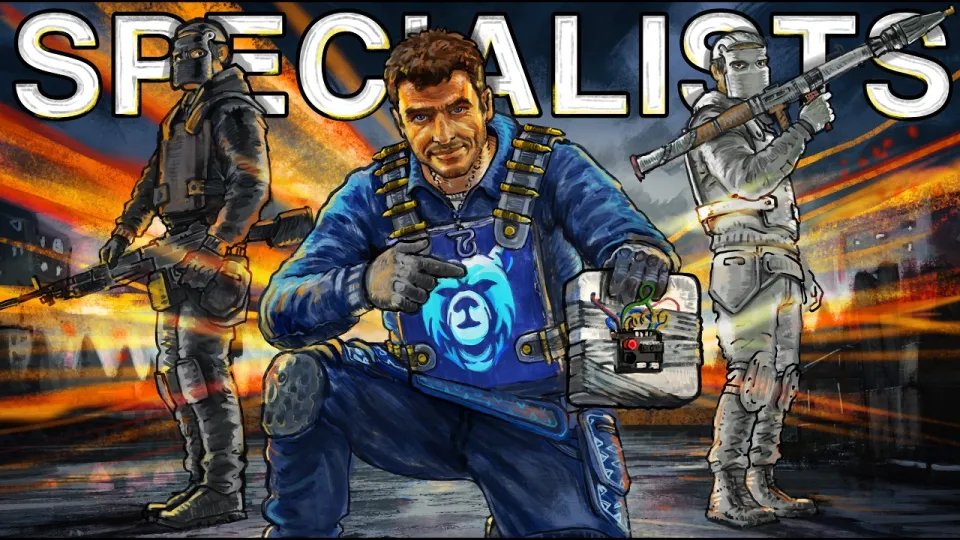
Video: How a 40,000-Hour Trio CONTROLS a SERVER - Rust
You can order the same kind of articles for your own video to boost it on YouTube and Google. Just message the Telegram bot @sat_sit_bot. It writes articles around your video, embeds the video and publishes them on popular niche websites (no ads). Your first 50 articles are free.
· based on the channel Blooprint
Key takeaways
- Blooprint, Disfigure and Nine bring roughly 40,000 combined hours into one Rust trio.
- The wipe runs on a 500+ population server, where competition for monuments and raids is constant.
- The run starts with no big plan and escalates into raiding every rival group on the map.
- Online raids, M2 and L9 roams, and base defenses drive the story from mid-wipe onward.
- The trio's edge is tempo: gear up fast, take fights early, and never let rivals rebuild.
A 40,000-hour Rust trio controls a server by compressing the whole wipe into a few days: fast starts on a high-population map, early gear and monument control, aggressive roams with top-tier weapons, and online raids that remove rivals before they can regroup. In Blooprint's run with Disfigure and Nine on a 500+ pop server, that tempo turns an aimless fresh wipe into full-map dominance — you can follow the live version of that playstyle on Blooprint's Twitch channel.
What 40,000 hours actually buys a Rust trio
Experience in Rust shows up less as raw aim and more as decision speed, and that is where a trio with tens of thousands of combined hours separates itself. Three players who have each seen thousands of wipes do not need to discuss basic calls: who farms what, who holds the door, when to push a fight, and when a raid is worth the sulfur.
The practical advantages stack up in a specific order:
- Loot routing. Experienced players know which monuments pay out fastest for a trio and skip the detours that eat the first hour of a wipe.
- Build discipline. A compact, defensible base with sensible loot rooms beats a big pretty base every time, and veteran groups build the small version first.
- Fight selection. Knowing which fights to take is worth more than winning every aim duel; a trio that avoids bad trades keeps gear while rivals burn theirs.
- Crafting economy. Sulfur, gunpowder and explosive budgets are planned before a raid, not improvised during one.
- Communication shorthand. Callouts, counts and rotations happen in a few words, which is the difference between a clean defense and a wipe.
On a 500+ population server, those five things compound. More players means more loot in circulation, more rivals farming the same monuments, and more groups that will counter a raid — so every minute saved early is a minute of pressure applied later.
How the wipe escalates from a casual start to server control
The run described in the video begins without major ambitions, and that is exactly what makes the escalation instructive. A trio that starts loose but stays efficient tends to hit a tipping point: once the core is secure and the first real gear is crafted, the group can start converting fights into loot instead of just surviving them.
The typical arc looks like this:
- Opening hours: land, secure a starter, push the nearest good monument, and get to a workbench tier that unlocks real weapons.
- First gear spike: once the trio has rifles and meds, roaming becomes profitable rather than risky, and every won fight feeds the next one.
- Base upgrade: the starter becomes a raid-resistant core with separated loot, so a single breach does not end the wipe.
- Offensive phase: the group stops reacting to the map and starts choosing targets — usually the neighbors and groups that have been contesting the same monuments.
- Raid cycle: each successful online raid returns more sulfur than it cost, which is how a trio keeps raiding without farming for days.
That last point is the real engine of control. Raiding is not a trophy activity in Rust; it is an economy. A group that raids profitably can keep raiding, and rivals who lose their bases lose their ability to contest anything.
Online raids, M2 and L9 roams, and why gear fear loses wipes
Top-tier gear roaming is the visible signature of a trio that believes it has already won the economy war. Taking an M2 or an L9 out of the base instead of leaving it in a box is a statement: the group expects to win fights, and it expects the gear to come back with more attached.
That mindset is rarer than it sounds. Most Rust players hoard their best weapons and only use them during a raid or a defense, which means the gear never generates value. A trio that roams with it converts every encounter into either loot or information — where rivals live, how many there are, and what they are defending.
Online raiding is the other half of the same logic. Offline raiding is cheap but teaches you nothing and often leaves the enemy's core intact if you misread the base. Online raids force real fights, and a trio with better aim and better comms usually wins those fights, then takes the base anyway. The risk is real, but the payoff is a rival group that is gone permanently rather than temporarily inconvenienced.
Base defense matters here too. A group that raids constantly will get raided back, and the trio that defends online, repairs under pressure, and counter-pushes through the breach keeps everything it earned. That two-way pressure — raiding hard and defending harder — is what makes a server feel controlled rather than merely contested.
Reading the audience reaction: skepticism, nostalgia and the lurker question
The comments around this type of Rust video reveal what viewers actually care about, and three themes dominate. First, plenty of people watch without playing: they follow the story, the tension and the humor rather than the mechanics, which is why long-form wipe videos work as entertainment even for non-players. Second, there is visible nostalgia for older trio lineups and for the era when top gear roams were the norm rather than an exception.
Third, and most useful for anyone trying to learn, viewers question sudden skill spikes. When players who have been quietly farming the river suddenly start winning every fight, the natural suspicion is that something changed off-screen. In practice there are ordinary explanations: a group that finally crafts rifles, a player who switches from farming to fighting, or a duo that merges into a bigger roster. Watching for those transitions — gear tier, group size, positioning — is more productive than assuming foul play.
A related lesson comes from the other side of the raid. Defending players often describe being caught mid-activity, eating, or otherwise unprepared, and that is exactly how most bases fall. If you are holding loot worth raiding for, the raid is already scheduled; the only question is whether you are online and ready when it arrives.
Practical takeaways for your own trio wipe
Server control is reproducible if you copy the structure rather than the highlight reel. A trio does not need 40,000 hours to apply the same priorities on a fresh wipe.
- Decide the first two hours before you spawn. Pick a monument route, a base spot with a fallback, and a workbench target.
- Build small first. A tight core with separated loot survives the raids that kill ambitious bases.
- Roam your best gear. Gear in a box earns nothing; gear in your hands wins fights and information.
- Budget sulfur per raid. Know the cost before you start, and only take fights that return more than they spend.
- Defend online whenever possible. Every successful defense is a raid the enemy paid for and lost.
- Remove rivals completely. Half-finished raids create revenge cycles that drain your own wipe.
The revenge element is worth naming explicitly. Raiding a group and leaving it functional guarantees a counter-raid later, usually at the worst time. Finishing the job — core, loot rooms, and any forward bases — is the difference between a quiet map and a permanent war.
Useful links
- Blooprint on Twitch — live wipes and raids
- Blooprint on Kick — alternative stream
- Blooprint on TikTok — short clips
- Blooprint on Twitter — announcements
- Blooprint Discord — community and squad finding
Final thoughts on server control in Rust
What makes this wipe worth studying is not the highlight kills but the sequence: a loose start, a fast gear spike, profitable raids, and rivals removed before they could rebuild. The trio format amplifies that sequence because three players can farm, craft and fight at the same time without splitting loot three ways too thin. Blooprint's channel is the place to see that structure play out in full, with Disfigure and Nine filling the roles that make a trio efficient rather than just crowded. If you want to copy it, start with the boring parts — base layout, sulfur math and fight selection — and the dramatic parts follow. For live versions of these wipes, watch Blooprint on Twitch.
Source: How a 40,000-Hour Trio CONTROLS a SERVER - Rust · Markdown version
Questions & answers
Why does a trio with 40,000 hours dominate a 500+ pop Rust server so quickly?
Experience mostly buys decision speed rather than raw aim. Veteran players pick monuments, base spots and fights faster, so they reach a gear tier before most rivals finish their starter. On a high-population server that early lead compounds into monument control and profitable raids.
Is roaming with an M2 or L9 actually worth the risk?
Yes, if the group can win fights consistently. Gear kept in a box generates nothing, while gear in your hands produces loot, information about rival bases and pressure on the map. The risk only pays off when the trio has meds, numbers and a plan to recover the kit.
How do you stop a rival group from coming back for revenge after a raid?
Finish the raid completely: core, loot rooms and forward bases. A group left with a working base and a stash will counter-raid later, usually when you are least ready. Removing their production capacity ends the cycle.
I have never played Rust — can I still follow this kind of wipe video?
Yes. Long-form wipe videos work as stories: the tension comes from raids, defenses and rivalries rather than from mechanics knowledge. Viewers who do not play often follow the economy and the drama more easily than the crafting details.